
T: +86-571-63781600
Zaoxi Industrial Park, Tianmushan Town, Lin'An City, Zhejiang, China
Views: 0 Author: Site Editor Publish Time: 2025-08-18 Origin: Site
Zhejiang Qinghong New Material Co., Ltd. has been a pioneer in manufacturing organic bentonite since 1980, delivering high-performance solutions for coatings, inks, and adhesives. Organic bentonite plays a vital role in solventborne systems, offering formulators an efficient way to control sag, prevent pigment settling, and maintain consistent application performance. Unlike simply thickening a paint, organic bentonite improves thixotropy and storage stability, ensuring that high-build coatings maintain uniformity during both storage and application. By leveraging Qinghong’s decades of experience in producing high-quality organoclays, coating formulators can achieve superior results across a variety of resin and solvent systems, improving product consistency and end-use performance.
When discussing organic bentonite, it is essential to distinguish between thixotropy and viscosity. Thixotropy refers to a material’s ability to reduce its viscosity under shear and recover its structure when the shear is removed. In practical terms, this means that coatings with organic bentonite can flow easily during brushing, spraying, or rolling but regain structure quickly to prevent sagging on vertical surfaces. Viscosity alone does not provide this property—thicker paints may resist flow but can fail in leveling and finish quality. The organoclay network structure contributes to improved anti-sag behavior, ensuring metallic flakes or heavy pigments do not settle during application, while maintaining smooth, uniform film formation.
Organic bentonite offers multiple advantages in solventborne coatings, extending beyond simple thickening:
Anti-Sag Properties: By forming a three-dimensional network within the coating, organic bentonite suspends pigments and metallic flakes, preventing downward flow on vertical or overhead surfaces. This is particularly critical for high-build primers and metallic finishes where sag can lead to aesthetic defects and uneven protection.
Anti-Settling Performance: Pigments, fillers, and additives remain evenly dispersed during storage, reducing the need for repeated stirring or remixing before application. Consistent particle suspension also reduces the risk of color shifts or coating defects.
Extended Storage Stability: Coatings maintain uniform consistency over time, which is crucial for batch-to-batch reproducibility. The organoclay network resists separation caused by gravity or temperature fluctuations.
Optimized Application Window: With proper thixotropy, coatings can be applied across a wider range of environmental conditions without compromising leveling, flow, or finish quality. This versatility allows formulators to deliver coatings suitable for varying climates and industrial requirements.
These benefits collectively improve overall performance, particularly in high-build primers, metallic coatings, heavy-pigment inks, and specialty adhesives, where uniformity and finish quality are critical.
Organic bentonite is especially suitable for:
High-Build Primers: Ensures vertical hold, prevents sag, and maintains even thickness on walls, panels, and machinery.
Metallic and Pearlized Coatings: Maintains flake orientation, reduces settling, and ensures consistent visual effects over large surface areas.
Heavy-Pigment Inks and Adhesives: Suspends dense pigments and fillers to improve application uniformity, color strength, and film integrity.
However, formulators should exercise caution in certain scenarios. Highly polar resin systems may exhibit incompatibility with specific organoclays, reducing efficiency. Solvents that aggressively swell or strip the clay can compromise the rheology network. Additionally, formulations with extremely low pigment volume concentration (PVC) may not benefit significantly from organic bentonite, and its use could unnecessarily increase viscosity. Proper compatibility testing ensures the selected organoclay grade provides intended performance without adverse effects.
The efficiency of organic bentonite is closely tied to solvent polarity and the type of resin. Low-polarity solvents, such as hydrocarbon or silicone-based carriers, require organoclays with enhanced dispersion properties to achieve adequate thixotropy. High-polarity solvents, including alcohols, ketones, or esters, demand clays that resist rapid swelling and maintain a stable gel network.
Mapping to common resins:
Alkyd Resins: Moderate-polarity organoclays improve sag resistance and maintain smooth leveling without affecting gloss.
Acrylic Resins: High-polarity grades support pigment suspension and consistency in water-compatible solventborne formulations.
Epoxies and Polyurethanes (PU): Tailored organoclays maintain anti-settle properties, improve film integrity, and prevent syneresis in high-performance coatings.
By selecting the correct grade, formulators can maximize efficiency, reduce potential processing issues, and enhance overall coating performance. Qinghong provides a range of grades suited to various solvent and resin systems, simplifying formulation design.
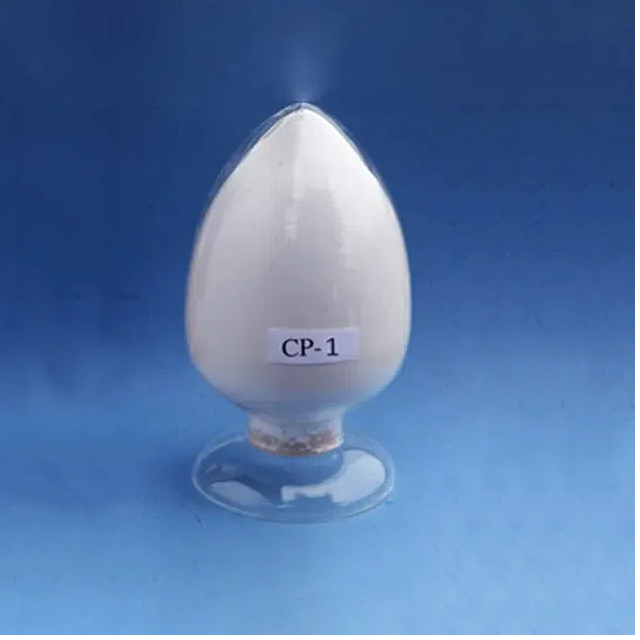
Proper activation and incorporation are critical to unlocking organic bentonite’s full potential. Two primary methods are widely used:
Direct-Gel Method: Organoclay is added directly to the resin or solvent under controlled high-shear conditions. This method works well for small- and medium-scale applications where mechanical dispersion can adequately form the thixotropic network.
Pre-Gel Method: Clay is pre-dispersed with a portion of the solvent and activator to form a gel before integrating into the main batch. This ensures thorough wetting, avoids seed gels, and promotes uniform network formation.
Polar activators, typically alcohols or salts, enhance clay swelling and network formation. Correct dosing and timing are critical: early addition may lead to lumping, while late incorporation can result in incomplete activation. Maintaining appropriate shear during incorporation ensures consistent viscosity, thixotropy, and anti-settle behavior.
While proprietary recipes remain confidential, general patterns illustrate effective usage:
Anti-Sag Mill-Base Template: Organic bentonite is introduced after pigment grinding to stabilize metallic or heavily loaded pigment suspensions.
Anti-Settle Let-Down Template: The clay is blended during the final let-down stage to maintain pigment suspension and uniformity, even at high pigment concentrations.
These patterns guide formulators in achieving optimal results while maintaining flexibility across different solvent and resin combinations.
Even with appropriate clay selection, issues may arise:
No Gel Formation: Often caused by insufficient activator or low shear; increasing shear or adjusting polar activator resolves this.
Seed Gels: Pre-agglomerated clay requires extended high-shear dispersion to fully disperse.
Syneresis or Bleed: Excessive activator or incompatible resins may separate; adjusting activator levels or resin compatibility improves stability.
Gloss Loss: Over-thickening may reduce leveling; balancing viscosity and thixotropy is critical.
Roller Spatter: Insufficient thixotropy; upgrading to a higher-grade organoclay may be needed.
Poor Leveling: Inadequate shear during application; adjusting gel structure resolves finish defects.
Settling Comeback: Incomplete activation or insufficient loading; revisiting incorporation steps prevents re-sedimentation.
These checks allow formulators to quickly resolve common coating defects and ensure reliable end-product performance.
Bench tests provide rapid verification of organic bentonite performance:
Sag Bar Test: Measures vertical flow resistance to ensure coatings do not sag during application.
24-Hour Storage Stability Jar Test: Evaluates pigment or filler settling over time.
KU/Ici Viscosity Profiles: Monitors shear-dependent flow and recovery, confirming thixotropy.
Viscosity vs. Shear Ramps: Ensures the gel network responds appropriately under different application shear rates.
Regular testing ensures consistency, minimizes batch-to-batch variation, and maintains high-quality performance throughout production.
Organic bentonite remains a cornerstone for solventborne coatings, delivering reliable sag control, anti-settle performance, and consistent application. Zhejiang Qinghong New Material Co., Ltd. provides high-grade organic bentonite tailored to diverse coating systems, helping formulators achieve uniform, high-performance finishes. For more information on selecting the appropriate grade or technical guidance, contact us to explore Qinghong’s full range of organic bentonite products and enhance your formulation performance.


