
T: +86-571-63781600
Zaoxi Industrial Park, Tianmushan Town, Lin'An City, Zhejiang, China
Views: 0 Author: Site Editor Publish Time: 2025-11-13 Origin: Site
In the modern industrial landscape, efficiency, sustainability, and quality control are paramount. Among the numerous materials contributing to these goals, organic bentonite clay has emerged as a highly versatile and eco-friendly solution. Particularly when used as a bentonite clay binder, this natural material is transforming a variety of industrial manufacturing processes, from construction to metallurgy. In this article, we explore the role of organic bentonite clay as a binder, its benefits, applications, and why it’s becoming a critical component in sustainable industrial practices.
Organic bentonite clay is a naturally occurring clay that exhibits remarkable absorbent, swelling, and binding properties. Unlike traditional clays, organic bentonite is processed to retain a high purity and enhanced performance while remaining environmentally friendly. Its layered structure, rich in montmorillonite, allows it to hold water, organic molecules, and other additives, making it highly effective as a binder in industrial applications.
Key characteristics of organic bentonite clay include:
High Absorbency – It can absorb several times its weight in water or liquids, which improves its binding capabilities.
Swelling Properties – When hydrated, the clay expands, forming a cohesive matrix that enhances structural integrity.
Eco-Friendly Composition – Naturally occurring, non-toxic, and often processed with minimal chemical additives, making it safe for industrial and environmental use.
These properties make it ideal as a bentonite clay binder, which is widely used to combine fine particles, improve strength, and maintain consistency in manufacturing processes.
In industrial manufacturing, binders are essential materials that help hold components together, ensuring uniformity, structural stability, and ease of handling. Among the many options available, organic bentonite clay stands out due to its natural adhesive properties, adaptability, and eco-friendly profile. Its versatility allows it to be used across multiple sectors, from metal casting to construction and ceramics, offering both performance and sustainability advantages.
In metal foundries, sand molds form the backbone of casting operations. These molds must withstand high temperatures and maintain shape while molten metal is poured, making the choice of binder critical. Organic bentonite clay excels in this role due to several key characteristics:
Improved Mold Strength – Bentonite clay swells when mixed with water, creating a dense, cohesive matrix that resists breaking or crumbling under the pressure of molten metal. This ensures the mold retains its form and reduces the occurrence of casting defects.
Enhanced Surface Finish – Properly bound molds result in smoother cast surfaces, reducing the need for costly post-processing like grinding or polishing. This improves overall product quality and shortens production cycles.
Eco-Friendly Alternative – Compared to synthetic binders, organic bentonite emits fewer harmful gases when exposed to high temperatures, supporting sustainable foundry practices and reducing the environmental impact of metal manufacturing.
Foundries that integrate organic bentonite clay as a binder often experience higher yield rates, fewer mold defects, and more efficient energy consumption during mold preparation. Its natural properties also reduce the dependence on chemical additives, making it safer for workers and the surrounding environment.
Construction materials such as bricks, blocks, and tiles rely heavily on binders for cohesion, durability, and structural integrity. Organic bentonite clay enhances construction applications in several ways:
Strength and Durability – When incorporated into clay bricks, cement composites, or mortar, bentonite enhances compressive strength and improves resistance to cracking under mechanical stress.
Water Retention – Bentonite’s natural ability to retain moisture improves the curing process in concrete and plaster, promoting uniform hydration and reducing premature drying. This ensures consistent strength and longevity in the finished construction material.
Sustainable Construction – Being non-toxic and natural, organic bentonite reduces reliance on synthetic chemical binders. Its use aligns with green building practices, supporting certifications and eco-friendly construction initiatives.
By including bentonite clay binders in construction formulations, manufacturers can ensure that their products remain strong, durable, and resistant to environmental stressors like temperature fluctuations or moisture exposure.
Ceramic and refractory manufacturing presents unique challenges. Materials must maintain their shape during molding and drying, resist cracking, and endure extremely high temperatures during firing. Organic bentonite clay serves as an ideal binder for these processes:
Thermal Stability – Bentonite maintains structural integrity at elevated temperatures, preventing deformation during drying or kiln firing.
Improved Workability – Its plasticity enhances the moldability of ceramic and refractory mixes, making shaping and forming easier while reducing manual labor.
Reduced Cracking – By improving cohesion between particles, bentonite minimizes shrinkage and cracking during drying, ensuring a consistent finish and fewer defective products.
Manufacturers of tiles, refractory bricks, specialty ceramics, and even advanced industrial ceramics benefit from the predictable and high-quality results provided by organic bentonite clay binders. Its natural properties make it particularly suitable for applications where precision and reliability are paramount.
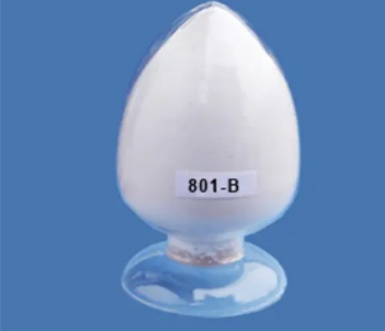
Beyond its immediate binding properties, organic bentonite clay offers a combination of performance, sustainability, and cost-effectiveness that makes it increasingly popular across industries.
Organic bentonite clay provides superior binding efficiency compared to many traditional synthetic binders. Its swelling properties and high plasticity enable strong, uniform bonds between particles, which is crucial in casting, molding, and forming operations. The result is better cohesion, fewer defects, and higher quality final products.
Sustainability is an ever-growing concern in modern manufacturing. Organic bentonite clay offers several environmental benefits:
Non-Toxic and Safe – Safe for workers and the environment during both use and disposal.
Biodegradable – Unlike many chemical binders, bentonite decomposes naturally, leaving no harmful residues.
Reduces Carbon Footprint – Minimal chemical processing and natural sourcing mean lower emissions compared to synthetic alternatives.
Its eco-friendly profile allows manufacturers to meet regulatory requirements, reduce environmental impact, and appeal to consumers increasingly concerned with sustainability.
Bentonite clay is not only widely available but also relatively low-cost, which makes it an attractive and practical choice for various industrial applications. One of its key advantages is bulk accessibility: manufacturers can source large quantities without the risk of supply chain disruptions, ensuring steady production even during peak demand periods. Additionally, bentonite clay’s high binding efficiency contributes to reduced material waste. Because it forms strong and uniform bonds between particles, less raw material is lost during handling, mixing, or molding processes, which lowers overall production costs.
Another benefit is its versatility. Organic bentonite clay can be adapted to different formulations across multiple industries, reducing the need to maintain a variety of binder types for separate applications. Whether used in metal casting, construction composites, ceramics, or refractory products, a single high-quality bentonite clay source can meet diverse production requirements. This multi-purpose capability simplifies procurement, storage, and inventory management, helping manufacturers optimize operational efficiency while maintaining product quality.
In manufacturing, consistency is critical. A reliable binder ensures predictable outcomes, reducing the risk of defects or uneven performance. Organic bentonite clay delivers uniform particle cohesion, promoting even mixing and compaction in molds, composites, or ceramic formulations. Its controlled workability and viscosity make shaping, forming, and molding processes smoother and more manageable, reducing the labor required for adjustments.
Furthermore, bentonite clay helps minimize defects such as cracking, shrinkage, or weak points in final products. This predictability leads to fewer rejected items, less rework, and higher overall efficiency. Manufacturers benefit from improved throughput, consistent product quality, and lower operational costs, making organic bentonite clay not only a sustainable and eco-friendly choice but also an economically sound and practical solution for industrial production.
The versatility of organic bentonite clay as a binder makes it applicable across multiple industrial sectors:
Industry | Application | Benefits of Bentonite Binder |
Foundry | Sand molds | Mold strength, surface finish, eco-friendly |
Construction | Bricks, tiles, cement composites | Moisture retention, durability, sustainable |
Ceramics & Refractories | Tiles, kiln products | Thermal stability, crack reduction, workability |
Environmental | Pelletized filters, waste treatment | Binding efficiency, natural filtration, sustainability |
Agriculture | Soil conditioning pellets | Soil cohesion, nutrient retention, natural binder |
By improving particle cohesion, consistency, and strength, bentonite clay binders streamline manufacturing processes while reducing defects and energy consumption.
With the global push toward sustainability and eco-friendly production, organic bentonite clay is poised to play an even larger role in industrial manufacturing. Future developments may include:
Nanocomposite Enhancements – Incorporating nanoparticles for even stronger binding and heat resistance.
Hybrid Formulations – Combining organic bentonite with biodegradable polymers for specialized applications.
Automation and Process Optimization – Tailoring bentonite binder formulations to work seamlessly in automated production lines.
As industries prioritize green manufacturing, organic bentonite clay offers an ideal balance of performance, safety, and environmental responsibility.
Organic bentonite clay is no longer just a raw material—it is a transformative solution in industrial manufacturing. Its unique properties as a bentonite clay binder enhance strength, consistency, and sustainability across multiple sectors, including construction, ceramics, foundry, and environmental applications. Companies that embrace this natural material gain not only superior product performance but also contribute to environmentally responsible industrial practices.
For businesses seeking reliable, high-quality organic bentonite clay for binder applications, Zhejiang Qinghong New Material Co., Ltd. offers a comprehensive range of products designed for modern industrial needs. You can explore their solutions, learn more about technical specifications, and get in touch with their experts to optimize your manufacturing process with eco-friendly bentonite clay.


