
T: +86-571-63781600
Zaoxi Industrial Park, Tianmushan Town, Lin'An City, Zhejiang, China
Views: 0 Author: Site Editor Publish Time: 2025-10-21 Origin: Site
Clay minerals have played a vital role in human civilization for thousands of years, from pottery and construction to industrial applications. Among these minerals, Bentonite has emerged as one of the most versatile and widely used clays in modern industries. Its unique physical and chemical properties make it indispensable in sectors such as drilling, foundry, and construction.
Bentonite is a natural clay primarily composed of montmorillonite, known for its exceptional swelling capacity, adsorption ability, and ion exchange properties. Its versatility allows it to serve multiple industrial purposes, from stabilizing drilling operations to acting as a binder in metal casting molds and as a sealing agent in construction projects.
Bentonite is a natural clay mineral mainly composed of montmorillonite, known for its layered structure, high water absorption, and swelling properties. It comes in two main types: sodium Bentonite, which swells significantly and is ideal for sealing and drilling applications, and calcium Bentonite, which excels at adsorbing oils and organic compounds for industrial and environmental uses. Its key features—swelling, adsorption, ion exchange, and viscosity—make it a versatile material across multiple industries, from drilling and construction to water treatment and environmental management.
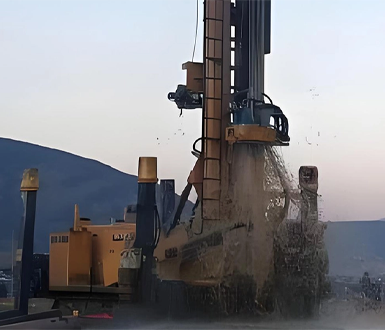
Drilling operations, whether for oil, gas, geothermal wells, or water extraction, rely heavily on specialized drilling fluids to ensure efficiency and safety. These fluids must stabilize boreholes, lubricate the drill bit, transport cuttings to the surface, and prevent collapses. Bentonite has become the material of choice in drilling mud formulations due to its unique combination of natural properties.
Bentonite-based drilling muds are versatile fluids, either water- or oil-based, that facilitate the drilling process. The clay’s swelling property allows it to seal microfractures in borehole walls, maintaining structural integrity and preventing caving. Its viscosity and gel-forming ability enable efficient suspension and transport of rock, sand, and soil particles to the surface, ensuring a smooth drilling operation. Furthermore, Bentonite reduces friction between the drill bit and the borehole wall, enhancing equipment longevity and operational efficiency.
Sodium Bentonite: Known for its exceptional swelling capacity and gel strength, sodium Bentonite is particularly effective in borehole stabilization and sealing. Its suspension properties ensure that cuttings are lifted efficiently to the surface, minimizing downtime and operational risks.
Calcium Bentonite: Although it swells less than sodium Bentonite, calcium Bentonite is ideal for environmentally sensitive drilling operations. It effectively adsorbs oils, chemicals, and contaminants, and is often blended with additives to optimize performance in specialized drilling scenarios.
Modern drilling increasingly emphasizes sustainability and reduced environmental impact. Bentonite is non-toxic, biodegradable, and naturally abundant, making it a safer alternative to synthetic polymers in drilling fluids. Its natural properties minimize the need for chemical additives, reducing the risk of groundwater contamination and supporting eco-friendly drilling practices.
In the foundry industry, Bentonite is indispensable as a binder in sand molds for metal casting, contributing directly to mold stability, surface smoothness, and overall casting quality.
During sand casting, Bentonite binds individual sand grains into a coherent mold capable of withstanding high temperatures of molten metal. Its plasticity ensures that even complex and detailed designs maintain their shape without cracking or collapsing. This is crucial for producing high-precision components in both ferrous and non-ferrous metal industries.
The integrity of the mold determines the final quality of the cast product. Bentonite enhances mold strength and resilience, reducing defects such as warping, surface cracks, or incomplete casting. Sodium Bentonite is preferred in applications requiring high binding strength and mold reusability, whereas calcium Bentonite is often selected for non-ferrous metals where lower thermal resistance is sufficient.
Ferrous Metals: High thermal stability and strong binding properties are essential for iron, steel, and other high-temperature metals.
Non-Ferrous Metals: Focus is on mold surface finish, detail reproduction, and reusability, as temperature requirements are lower.
Enhanced surface finish and precision of castings
Improved mold reusability, reducing overall costs
Reduced defects, such as cracks, warping, or surface imperfections
By ensuring high-quality mold integrity, Bentonite plays a critical role in foundry efficiency, helping manufacturers achieve consistent results and lower operational costs.
Bentonite’s swelling and sealing properties make it a versatile material for civil engineering and construction projects. It is widely used in waterproofing, seepage control, and foundation stabilization.
In projects like underground tunnels, dams, and deep foundations, Bentonite acts as a barrier against water infiltration. When hydrated, sodium Bentonite forms a viscous gel that fills gaps and voids in the soil, effectively sealing leaks and protecting structural integrity. Its ability to expand and conform to irregular surfaces ensures long-term performance in challenging conditions.
Bentonite is frequently incorporated into dam cores and embankments to prevent water seepage. Its swelling property allows it to maintain barrier integrity even under fluctuating pressures and moisture conditions. In foundation stabilization, Bentonite slurry fills voids, enhances soil cohesion, and improves load-bearing capacity, which is critical for safe and durable infrastructure.
In modern construction, Bentonite is blended with cement and grout to enhance workability, reduce permeability, and improve adhesion. Its water-retention ability and expansion characteristics help achieve leak-proofing in basements, retaining walls, and other containment structures, providing long-lasting protection against water damage.
Bentonite is non-toxic, naturally abundant, and reusable, making it a sustainable choice for large-scale projects. Its use reduces reliance on synthetic sealants and chemical additives, promoting environmentally responsible construction practices and supporting green building initiatives.
While Bentonite is highly versatile, some limitations should be noted:
Performance Variations: Sodium Bentonite excels in swelling and sealing, while calcium Bentonite is better for adsorption and specific environmental applications. Choosing the wrong type can reduce efficiency.
Temperature and Chemical Limitations: Extreme temperatures or strong chemical exposure can reduce Bentonite’s effectiveness. Fire Clay or synthetic alternatives may be preferable in such cases.
Handling and Storage: Bentonite requires proper storage to prevent moisture loss or contamination. Rehydration may be necessary before use in drilling or construction.
Expert Guidance Needed: Correct selection and application of Bentonite, including grading and dosing, are crucial for achieving optimal results in industrial processes.
Understanding these factors ensures that Bentonite is applied effectively, maximizing its performance and cost-efficiency.
Bentonite is a highly versatile clay mineral with unparalleled value in drilling, foundry, and construction industries. Its swelling, adsorption, and binding properties allow it to stabilize boreholes, bind sand molds, seal structures, and support sustainable construction practices. Sodium Bentonite is ideal for applications requiring maximum swelling and sealing, while calcium Bentonite excels in adsorption and specialized environmental uses.
For industries seeking a cost-effective, eco-friendly, and high-performance solution, Bentonite often offers the best balance across multiple applications. Other clays like Kaolin, Fuller’s Earth, Attapulgite, and Fire Clay remain critical in specialized sectors such as ceramics, oil purification, agriculture, and refractory applications.
Businesses are encouraged to work with experienced suppliers to select the right Bentonite grade and type for their specific needs. Zhejiang Qinghong New Material Co., Ltd provides high-quality Bentonite solutions, expert guidance, and reliable supply to optimize industrial performance and ensure long-term operational efficiency.


