
T: +86-571-63781600
Zaoxi Industrial Park, Tianmushan Town, Lin'An City, Zhejiang, China
Views: 0 Author: Site Editor Publish Time: 2025-11-30 Origin: Site
In recent years, organic bentonite clay has garnered considerable attention in the fields of nanotechnology, materials science, and advanced manufacturing. Its natural properties, combined with organic modification, make it a versatile additive for creating high-performance nanocomposites and other innovative materials. From improving mechanical strength to enhancing thermal stability and environmental sustainability, organic bentonite clay plays a transformative role in modern material engineering.
Bentonite clay is primarily composed of montmorillonite, a layered aluminosilicate mineral known for its high surface area, cation-exchange capacity, and swelling properties. Organic bentonite clay is a modified form of natural bentonite, where organic cations replace some of the inorganic ions in the clay layers. This modification increases compatibility with organic polymers and improves dispersibility in various matrices.
Key features of organic bentonite clay include:
High surface area for effective intercalation with polymers or other materials.
Swelling and absorption properties that allow it to interact with fluids, polymers, or other additives.
Chemical stability, making it resistant to degradation under processing conditions.
Environmental friendliness, as organic modification often uses biodegradable or non-toxic agents.
These characteristics make organic bentonite clay particularly attractive for advanced material applications where traditional fillers or additives may fall short.
Nanocomposites are advanced materials composed of a base matrix—typically a polymer—reinforced with nanoscale fillers such as clay, graphene, or carbon nanotubes. Among these, organic bentonite clay stands out due to its layered structure, high surface area, and compatibility with organic materials. Incorporating organic bentonite clay into nanocomposites can significantly enhance their mechanical, thermal, and barrier properties, making them ideal for high-performance applications in various industries.
One of the most significant benefits of adding organic bentonite clay to nanocomposites is the improvement of mechanical strength. The clay’s plate-like layers intercalate with polymer chains, restricting molecular mobility and enabling better load transfer throughout the material. This results in measurable improvements in several key mechanical properties:
Increased Young’s modulus: The stiffness of the composite rises, making it more resistant to deformation under applied forces.
Enhanced tensile and flexural strength: The material can withstand higher mechanical stress before failing, which is particularly useful for structural components or automotive parts.
Improved impact and scratch resistance: The composite is less prone to damage during handling, transportation, or long-term use.
For example, in packaging applications, polymer films reinforced with organic bentonite clay can resist tearing while maintaining flexibility. In automotive components, such as interior panels or bumpers, these nanocomposites provide both strength and durability without significantly increasing weight.
Additionally, the uniform dispersion of bentonite layers helps reduce microcracks in the polymer matrix, contributing to longer service life and improved reliability in high-stress applications.
Thermal performance is another critical factor where organic bentonite clay offers advantages. When dispersed evenly, the clay layers act as a thermal barrier, slowing down heat transfer and delaying polymer degradation. The benefits include:
Higher degradation temperatures: Polymers can be used in applications that involve elevated temperatures without losing structural integrity.
Dimensional stability under heat: Warping, shrinkage, or distortion is minimized, making the material suitable for precision components.
Enhanced fire retardancy: During combustion, bentonite layers promote the formation of a char barrier that slows flame propagation and reduces smoke production.
These thermal enhancements are particularly valuable in electronics housings, automotive interiors exposed to sunlight, and industrial machinery components that experience fluctuating thermal loads. For instance, nanocomposite enclosures with bentonite fillers can protect sensitive electronics by maintaining internal temperatures within safe ranges.
Organic bentonite clay also improves the barrier properties of nanocomposites. Its layered structure creates a tortuous pathway that makes it difficult for gases, liquids, or chemical species to penetrate:
Reduced oxygen permeability: In food packaging, this slows oxidation and extends product shelf life.
Limited moisture transmission: Reduces water vapor penetration, which is critical for electronics, pharmaceuticals, or moisture-sensitive goods.
Chemical resistance: Serves as a barrier against acids, solvents, or other potentially harmful substances.
This combination of mechanical and barrier properties enables clay-based nanocomposites to replace traditional packaging materials while offering superior protection and durability.
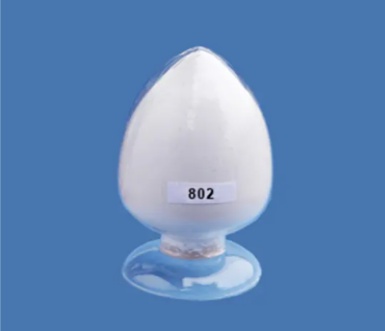
Beyond its role in polymer nanocomposites, organic bentonite clay is increasingly utilized across a broad spectrum of advanced material applications due to its versatility, environmental compatibility, and performance-enhancing properties. Its unique layered structure, high surface area, and organic modification make it suitable for a range of industries, from coatings and environmental solutions to biomedical materials and construction.
In the coatings and paint industry, organic bentonite clay plays a vital role in improving both performance and durability. Its natural thixotropic properties enhance the rheology and suspension stability of paints, preventing pigments from settling or separating over time. This ensures that coatings maintain uniform color and consistent texture, which is critical for high-quality finishes.
Additionally, the clay provides scratch and abrasion resistance, making coated surfaces more durable under everyday wear or mechanical stress. Its layered structure also allows for the effective incorporation of functional additives, such as UV stabilizers, antimicrobial agents, or corrosion inhibitors, further improving the protective and functional qualities of coatings.
These properties make bentonite-reinforced coatings particularly suitable for automotive finishes, industrial machinery, marine applications, and decorative paints, where long-lasting performance, surface integrity, and resistance to environmental factors are essential.
Organic bentonite clay is highly effective in environmental remediation applications due to its adsorption and flocculation capabilities. It can capture organic pollutants like dyes, oils, and solvents, as well as heavy metals including lead, cadmium, and mercury. Additionally, it can trap micro-pollutants from industrial effluents or municipal wastewater.
Applications include water treatment membranes, absorbent mats for chemical spill control, nanocomposite filtration systems, and even soil stabilization projects. Its organic modification enhances compatibility with polymers or other materials, enabling the production of high-performance, environmentally friendly composites that support sustainable pollution management.
The clay’s ability to immobilize contaminants not only improves environmental safety but also reduces disposal costs and helps industries comply with increasingly stringent environmental regulations.
In the biomedical field, organic bentonite clay demonstrates biocompatibility, structural support, and controlled-release properties. Its layered structure allows drugs to be intercalated or encapsulated, providing sustained or targeted release, which is valuable in oral, transdermal, or injectable formulations.
Additionally, bentonite clay can be incorporated into hydrogels, wound dressings, and tissue engineering scaffolds, enhancing mechanical integrity, absorbency, and biodegradability. These properties support cell growth, tissue regeneration, and effective wound management, highlighting the clay’s versatility beyond industrial applications and into high-tech healthcare solutions.
Organic bentonite clay also improves construction materials and ceramics by enhancing workability, water retention, and mechanical stability. In cement and concrete, it improves mixing consistency, crack resistance, and surface finish. In ceramic composites, bentonite clay reinforces strength, thermal resistance, and dimensional stability.
Furthermore, its role as a binder and stabilizer ensures consistent material quality, long-term durability, and reduced susceptibility to environmental stressors such as temperature fluctuations or moisture changes. These features make it an ideal additive for high-performance structural materials.
Incorporating organic bentonite clay into advanced materials provides numerous advantages, making it a preferred additive for manufacturers and researchers:
Eco-friendly: Biodegradable, non-toxic, and aligned with sustainable manufacturing practices.
Enhanced material properties: Improves mechanical strength, thermal stability, barrier performance, and chemical resistance.
Versatility: Compatible with a wide range of materials, including polymers, ceramics, coatings, hydrogels, and construction composites.
Cost-effective: Delivers performance enhancement at a lower cost compared to high-end nanofillers like carbon nanotubes or graphene.
Regulatory compliance: Supports environmental and safety standards, helping companies meet global sustainability and performance requirements.
By leveraging organic bentonite clay, industries can develop high-performance, environmentally responsible materials across multiple sectors, from construction and coatings to healthcare and environmental engineering.
To maximize benefits, choosing the right grade and modification of organic bentonite clay is essential:
Particle size: Smaller, exfoliated particles provide better dispersion and performance.
Organic modification type: Tailored for compatibility with specific polymer or solvent systems.
Purity: Minimal impurities ensure consistent performance and prevent defects in final materials.
Consulting experienced suppliers can help manufacturers select the most suitable clay for their specific applications, ensuring optimal results in performance and cost.
Organic bentonite clay is emerging as a cornerstone in the development of nanocomposites and advanced materials. Its unique combination of mechanical reinforcement, thermal stability, barrier properties, and environmental compatibility makes it invaluable across industries—from automotive and packaging to biomedical and construction applications. As technology evolves, the demand for multifunctional, sustainable materials will only grow, and organic bentonite clay is well-positioned to meet these challenges.
For manufacturers and researchers interested in exploring the full potential of organic bentonite clay in advanced material applications, Zhejiang Qinghong New Material Co., Ltd. offers high-quality products and technical support. You can learn more about their solutions and discuss customized material options by contacting them directly. Their expertise can help you integrate organic bentonite clay into your next generation of innovative materials.


