
T: +86-571-63781600
Zaoxi Industrial Park, Tianmushan Town, Lin'An City, Zhejiang, China
Views: 0 Author: Site Editor Publish Time: 2025-10-02 Origin: Site
Wastewater management is one of the most pressing environmental challenges facing industries and municipalities today. Industrial processes, urban runoff, and municipal sewage contribute to a growing burden on freshwater systems. Contaminated water containing heavy metals, oils, organic pollutants, and suspended solids poses serious risks to ecosystems, human health, and overall environmental sustainability. Traditional wastewater treatment techniques often rely heavily on chemical additives, complex filtration systems, or energy-intensive processes. These approaches, while effective, can be costly and may introduce secondary pollutants.
In this context, there is a growing demand for sustainable, low-cost, and environmentally friendly solutions. Natural clay minerals, particularly Bentonite, have emerged as highly effective materials for wastewater treatment. Bentonite is a naturally occurring clay primarily composed of montmorillonite. Its unique structural and chemical properties make it ideal for adsorbing pollutants, enhancing sedimentation, and improving water quality. Its versatility and eco-friendly nature have made it a preferred choice for industries and municipalities seeking sustainable wastewater solutions.
Bentonite’s effectiveness in wastewater management arises from several inherent physical and chemical characteristics. Understanding these properties is essential to harness its full potential.
Bentonite has an extensive surface area and a negatively charged lattice structure, allowing it to adsorb a wide variety of pollutants. This includes heavy metals such as lead, mercury, and cadmium, as well as organic compounds, dyes, and oils. By binding these contaminants, Bentonite prevents their dispersion into water bodies, effectively lowering toxicity levels.
One of Bentonite’s most remarkable properties is its ability to swell upon hydration. Sodium Bentonite, in particular, can expand several times its dry volume when exposed to water. This swelling forms a gel-like structure that stabilizes suspended particles, facilitating faster sedimentation. In wastewater management, this property enhances the clarity of treated water and reduces the reliance on mechanical filtration systems.
Bentonite can exchange cations in its structure with ions present in surrounding water. This cation exchange property allows it to remove dissolved heavy metals and other ionic contaminants from wastewater. By replacing harmful ions with harmless ones, Bentonite contributes to improved water chemistry and overall quality.
Unlike many synthetic chemical agents, Bentonite is non-toxic, biodegradable, and environmentally safe. Its natural origin and chemical inertness ensure that its application does not introduce additional pollutants into water systems. Furthermore, Bentonite is widely available and cost-effective, making it a practical choice for both small-scale and large-scale wastewater projects.
These properties collectively make Bentonite a multi-functional material, capable of addressing a wide range of wastewater challenges efficiently and sustainably.
The effectiveness of Bentonite in wastewater management relies on several complementary mechanisms.
Bentonite’s high surface area and negative charge allow it to attract and hold positively charged contaminants. Heavy metals such as lead and cadmium bind to Bentonite surfaces, removing them from wastewater streams. Similarly, organic pollutants like dyes, oils, and pesticides are adsorbed onto the clay, preventing their release into natural water bodies. The ion exchange process further enhances this removal, replacing harmful ions with benign alternatives.
The gel-like structure formed by hydrated Bentonite encourages flocculation, where small suspended particles aggregate into larger clusters. These flocs settle more quickly, improving the clarity of treated water. This mechanism is particularly useful in municipal and industrial wastewater treatment, where turbidity reduction is essential. By enhancing sedimentation, Bentonite reduces the need for mechanical clarifiers and additional chemical coagulants.
In food processing, petrochemical, and industrial wastewater, oils and greases are major pollutants that can disrupt biological treatment processes. Bentonite effectively binds oils and organic compounds, separating them from water. This not only improves water quality but also protects downstream infrastructure, such as pumps and pipelines, from fouling and corrosion.
Bentonite is highly compatible with other wastewater treatment methods, allowing it to enhance overall treatment efficiency. It can be used alongside:
Chemical coagulants and flocculants for faster sedimentation
Membrane filtration systems to reduce fouling and improve flux
Activated carbon for adsorption of residual organics
This versatility makes Bentonite a valuable component in both primary and secondary wastewater treatment processes.
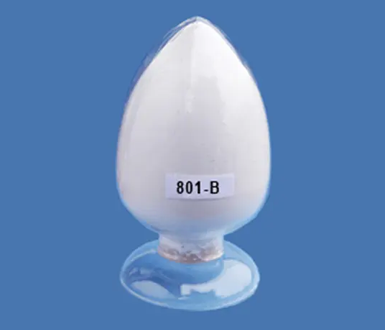
Different types of Bentonite are suited to specific wastewater treatment needs.
Known for its high swelling capacity and superior suspension stability
Ideal for applications requiring enhanced flocculation and particle sedimentation
Commonly used in municipal wastewater treatment, slurry barriers, and large-scale industrial processes
Lower swelling capacity but excellent oil and organic matter adsorption
Preferred for industrial wastewater containing oils, grease, or organic pollutants
Often combined with additives to improve flocculation and treatment efficiency
The choice between sodium and calcium Bentonite depends on the nature of the wastewater:
Heavy metals and suspended solids → Sodium Bentonite
Oils and organics → Calcium Bentonite
Mixed pollutants → Customized blends or combinations with other treatment agents
Selecting the appropriate Bentonite type ensures maximum pollutant removal and cost-effectiveness.
Bentonite is widely used across various wastewater management scenarios.
Industries such as chemical manufacturing, textiles, and food processing generate wastewater with high pollutant loads. Bentonite is applied to remove:
Heavy metals
Dyes and pigments
Oils and greases
By adsorbing contaminants and promoting sedimentation, Bentonite improves water quality and reduces the environmental footprint of industrial operations.
Municipal sewage often contains suspended solids, organic matter, and pathogens. Bentonite enhances:
Flocculation of suspended particles
Sedimentation efficiency
Overall water clarity
Its natural, non-toxic nature ensures safe treatment without introducing additional chemical risks.
In wastewater from food processing or petrochemical plants, oils and grease can create serious treatment challenges. Bentonite binds these substances, forming flocs that can be removed via sedimentation or filtration. This prevents pipeline fouling and reduces maintenance costs.
Bentonite is also used in environmental remediation projects:
As a barrier in contaminated sites to prevent pollutant migration
In ponds, rivers, and lakes to stabilize sediments and immobilize heavy metals
Protecting groundwater from industrial and municipal contaminants
These applications highlight Bentonite’s versatility beyond conventional wastewater treatment.
Bentonite is a highly effective and sustainable solution for wastewater management. Its natural properties—swelling, adsorption, ion exchange, and flocculation—make it ideal for treating industrial effluents, municipal sewage, and environmental remediation projects. Sodium Bentonite is particularly effective in reducing turbidity, enhancing sedimentation, and improving water clarity, while Calcium Bentonite excels in removing oils and organic pollutants. Cost-effective, eco-friendly, and compatible with various treatment technologies, Bentonite offers a versatile approach to cleaner water solutions. Companies seeking high-quality Bentonite products and tailored wastewater solutions can benefit from collaborating with experienced suppliers like Zhejiang Qinghong New Material Co., Ltd. Leveraging their expertise ensures optimal material selection, efficient application, and sustainable results for industries and municipalities alike.


